GREAT IN TECHS

Showing posts with label GADGETS. Show all posts

Monday, March 28, 2022

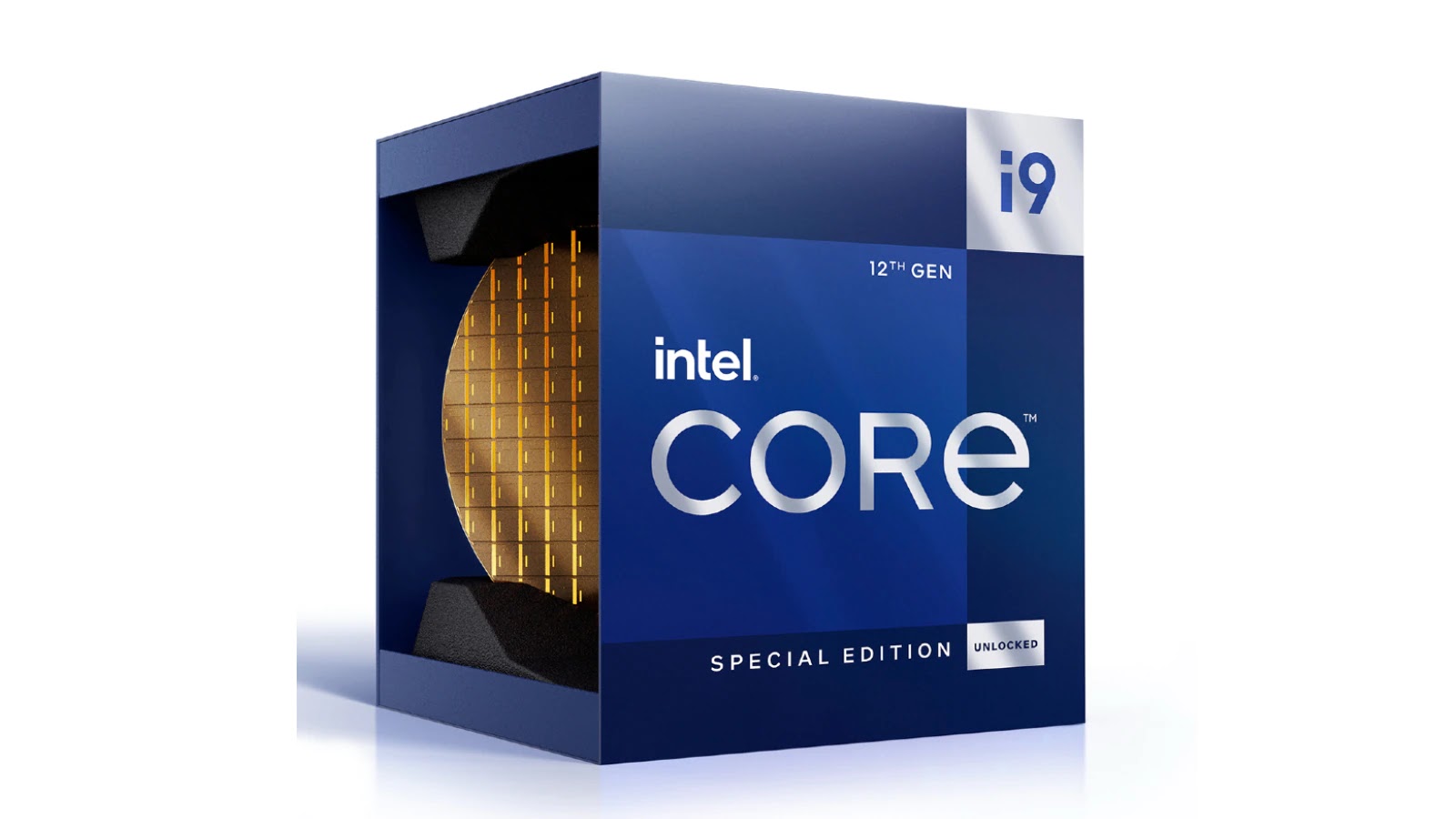
Intel launches Core i9-12900KS

 Intel Core i9-12900KS - Fastest Processor in world.


Intel has published with all the details of this i9-12900KS processor, including price and availability. acknowledged to be "the fastest desktop processor on world," the new Intel chipset will go on sale globally starting form April 5 - 2022. Intel mentions a "recommended customer price" of $739, or about Rs 56,000. So we can expect it to cost anywhere around Rs 50,000 to Rs 60,000 in India.

Main keys - the Core i9-12900KS delivers up to 5.5 GHz max turbo frequency. For context, its rival AMD's Ryzen 9 5900X comes with a base clock of 4.8 GHz, so expect significant performance speeds on the new Intel processor.

The fast processing speed is backed by Intel's proprietary technologies like its Thermal Velocity Boost and Adaptive Boost Technology. And just like any other top-end processor, Intel says that the Core i9-12900KS is meant to provide "the ultimate gaming experience" to even the most extreme gamers.

With Core i9-12900KS, Intel targets "enthusiasts and gamers" who seek the fastest processor speeds available in the market. In numbers, it comes with 16 cores, including eight Performance-cores and eight Efficient-cores, along with 24 threads. The performance maps to 5.5 GHz max turbo frequency, 150W processor base power, and 30MB Intel Smart Cache.
Share:

Saturday, September 18, 2021

iPhone 13: the missing features!


iPhone 13: the missing features!


The latest iPhone13 come with powerful upgrades, but we could find lots of missing features that were either rumored or that competitors already have.


iPhone 13 and 13 Pro certainly have a lot to offer over their predecessors: longer battery life, better cameras and more storage space at the base level. But there are still plenty of features we'd hoped to see on the iPhone 13 lineup that are missing from Apple's latest iteration of smartphones. Many of these capabilities are available on Android competitors, while some can even be found on other Apple products. 

The iPhone 13, which became available for preorder Friday morning, starts at $829 for the standard model without a carrier discount. The Mini begins at $729, while the iPhone 13 Pro starts at $999 and the iPhone 13 Pro Max has an entry price of $1,099.


USB-C support

Wouldn't it be great if you could use the same charger for your iPhone and the other gadgets in your home? Unfortunately, Apple's latest iPhone is once again missing USB-C connectivity. As has been the case since 2012, the latest iPhones require Apple's proprietary Lightning cable for wired charging.

An in-screen fingerprint reader

Face ID works great most of the time, but it would be nice to have the option of using your fingerprint to unlock your device as well. That's especially true over the last year-and-a-half since Face ID can't accurately identify you while wearing a face mask. If you don't have an Apple Watch, you've probably been typing in your passcode much more than usual over the past year.

An always-on display

My Apple Watch has an always-in display, and I only wish my iPhone could, too. For years, smartphones from Samsung, OnePlus and other Android device makers have had screens that are capable of showing information on-screen even when the display is asleep. 


Center Stage for video calls

The entry-level iPad and iPad Mini now have Center Stage, the feature that automatically keeps your face in frame when video chatting over FaceTime, Zoom and other apps. It works automatically and has been super-convenient now that many of us are communicating with friends, coworkers and family members over video calls. 

It would be more useful, however, if Center Stage was available across all of Apple's products, including iPhones and Macs. In fact, I do most of my video chatting on an iPhone or a Mac rather than an iPad, especially since phones are smaller and usually easier to hold at eye level in portrait orientation. 
Share:

Sunday, July 12, 2020

WORLDS FIRST CAMERA : EYE OPENER

HISTORY BEHIND THE WORLDS FIRST CAMERA 


The camera’s history can be traced back to the Middle Ages with the first pinhole camera. A physicist by the name of Alhazen discovered the idea of Camera Obscura, which led him to the creation of the first pinhole camera. Camera Obscura, in short, is reproducing an image with color and perspective preserved.

The camera’s history can be traced back to the Middle Ages with the first pinhole camera. A physicist by the name of Alhazen discovered the idea of Camera Obscura, which led him to the creation of the first pinhole camera. Camera Obscura, in short, is reproducing an image with color and perspective preserved.

In 1816, inventor Nicéphore Niépce began to experiment with photography, although at the time he called it heliography. Niépce used light to create an almost photographic image of nature from his office window. He experimented with different materials to print the image on, including bitumen and pewter. The process began by Niépce placing an engraving onto the material of his choice. He would then expose it to light which would react to different chemicals that were coated on the plate, this would then create an image. The process took around eight hours and would fade away depending on the material used. However, this image could be considered the first photographic image.


The History of the Camera
The camera’s history can be traced back to the Middle Ages with the first pinhole camera. A physicist by the name of Alhazen discovered the idea of Camera Obscura, which led him to the creation of the first pinhole camera. Camera Obscura, in short, is reproducing an image with color and perspective preserved.

In 1816, inventor Nicéphore Niépce began to experiment with photography, although at the time he called it heliography. Niépce used light to create an almost photographic image of nature from his office window. He experimented with different materials to print the image on, including bitumen and pewter. The process began by Niépce placing an engraving onto the material of his choice. He would then expose it to light which would react to different chemicals that were coated on the plate, this would then create an image. The process took around eight hours and would fade away depending on the material used. However, this image could be considered the first photographic image.

In 1839, Louis Daguerre, the former partner of Niépce, created a practical photographic process with a daguerreotype. This process consisted of Daguerre taking a silver plated sheet that was made of copper and coated with silver iodide. 


Then, in 1885, George Eastman began to produce and manufacture paper film. Later Eastman created the Kodak camera, which was similar the one pictured above. The box consisted of a fixed focus lens and one single shutter speed. The camera was equipped with enough film for 100 pictures and required Kodak to process the photographs and reload the film at the end of each roll. These cameras were priced surprisingly low and this invention was the beginning mass marketed photography.

In 1913 Oskar Barnack began to research the possibility of inventing a smaller camera that anyone could use. The Leica camera began to be commercialized after World War 1, and they eventually developed second model called the Leica 1. Many of  the camera manufacturers at the time followed this example and began to produce more compact cameras to sell to the public. Over the years, cameras began to shrink in size and become more sophisticated. In 1948, Polaroid came out with an unconventional camera for the time, which is commonly known as the first instant-picture camera.  By the 1960’s, Polaroid cameras were considered the most popular cameras at the time.

The first digital camera was developed in 1988, but was never sold to the public. It wasn’t until 1991 that Kodak released the Kodak DCS, which was their first in a long line of digital cameras. The production and development of digital cameras has continued to increase over the years. Interestingly enough, despite the move from digital cameras to smartphone cameras, there has been a rise in popularity of Polaroid film cameras.
Share:

Monday, July 6, 2020

A NAIL WATCH : FUTURE OF TIME

NAIL WATCH : THE FUTURE OF TELLING TIME 


Timex and Core77 have collaborated to introduce one of the world's smallest watches. This unique, wearable gadget is disposable timepiece designed to mould to your fingernail and with its light up function makes a bold fashion statement.
The Timex Nail Watch has not officially been released on the market, so there's not yet any information regarding availability in stores or price point. This unique wearable gadget won Timex's 2154 The Future of Time Competition based on its innovative watch design. The miniature watch is translucent, and designed to fit the average fingernail. The display of the watch includes the time, date and AM/PM indictor which appears in clear format until lit up. This strange watch for your fingernail becomes even trendier at nighttime, as each design lights up in a different color when the tip of the fingernail watch is pressed.

Wearable gadget fanatics and the fashion forward can consider wearing a tiny watch on every fingernail, with each watch programmed to a different time zone around the world. Since watches are disposable, they're not designed to last forever; but no word yet on whether or not they are practical for an active lifestyle, since no information has been released regarding whether they will be waterproof or water resistant once available on the watch market, or how securely they will stick to your finger nail.

Admittedly, the Timex Nail Watch indeed makes a geeky fashion statement; but is this a trend that we will see entering the world of fashion? Wearable gadgets like watches don't have to be limited to the wrist after all, do they?

Share:

Friday, July 3, 2020

USB LIGHTER WATCH : A FLAME TO WATCHES

A USB LIGHTER WATCH , IF U CANT FIND ONE FOR YOU 


INTRODUCTION

It is a great opportunity to show your personal style with this unique lighting designed cigarette lighter
This cigarette lighter comes with delicate appearance and practical function
It is lightweight, small, and easy-to-take
The application of high quality material makes it safe and easy to use

SPECIFICATION

Material: Iron, Leathe
Watchband Size: 10.04 x 0.83 inch (L x W)
Watchcase Size: 1.73 x 0.59 inch (Dia. x H)
Weight: 3.42 oz/ 97 g

FEATURES

This butane lighter is made of fine quality material , it is easy to refill the watch
The best watch lighter may adept your noble flavour and taste Watch cigarette lighter is comfortable to wear, it is a ideal present for your friends
This butane lighter is essential to your enjoyment, whether you choose to smoke pipes, cigars or even cigarettes
It will be a good decoration for your wrist


PRODUCT SPECIFICATION

Model number                                                4331787225
Part Number                                             LigtherB
Model Year                                                     2019
Item Shape                                                         Round
Dial window material type                                                      GLASS                          
Display Type                                                 Analog
         CLASP                                                                   Tang Buckle
Case material                                                             alloy
Case diameter                                                                 0.95
Band Material                                                         Rubber
Band length                                                 Men's Standard
Band Color                                                                  Black
Dial color                                                         Black
Special features                                             lighter
Movement                                                     Quartz
Water resistant depth                                             10 Meters


WARANTY

If this product is sold by Amazon, please review the manufacturer’s website for warranty information. If this product is sold by another party, please contact the seller directly for warranty information for this product. You may also be able to find warranty information on the manufacturer’s website.
Share:

Thursday, July 2, 2020

NEW GEL FRIDGE : BIOPOLYMER GEL STORE'S FOOD AND KEEP COOL

FRIDGE USING BIOPOLYMER GEL TO KEEP COOL 


It is time to reform the refrigerator as we know it in order to create a design that better addresses some of its problems encountered within the kitchen or the interior space at large, namely spatial issues, noise pollution, food waste and environmental sustainability.


In the age of “best by” dates, we tend not to think of it this way, but food, in fact, begins to decompose the second it is picked from the plant or killed.  Times of plenty (with large prey and harvests) necessitated methods for preserving food through unlucky hunts or harvests, and our ancestors, wherever they were, developed a range of methods for dealing with food decomposition, including drying, freezing, fermenting, pickling, curing and canning.


Each of these methods brought with it other health and economic challenges.  Properly done, they are generally labor- and time-intensive and require large amounts of salt and/or sugar to preserve the food. Improperly done, poorly preserved foods can kill both slowly, in remote areas where food surpluses and healthcare are hard to come by, and quickly, through food poisoning.


FOOD PRESERVATION

Refrigerator temperatures do not destroy spoilage microorganisms. Instead, they slow the growth of the microorganisms already in the food. The usage of air space within the fridge may sometimes provide uneven cooling areas within the appliance. Products stored closely, and on top of each other prevents cooling airs to circulate evenly. Along with the obstruction of visibility due to overcrowding of the fridge, many food products go to waste as we forget what we store inside the compartments, or behind other food items. 

ENVIRONMENTAL SUSTAINABILITY

Over the past years, refrigerators have become a lot more efficient in terms of energy usage. In 1990, a refrigerator (without icemaker) used 1100 kWh whereas in 2010 it went down to 500 kWh. Energy usage has dropped by half over the course of the past 20 years. This is a major achievement in energy efficiency, however, considering the rising global temperatures and climate change it is not good enough. In today’s homes, the refrigerator is still the biggest energy consumer (13.7%) after the air-conditioner (14.1%). In addition, today’s refrigerator requires leftover food to be wrapped and often times people use non environmentally friendly plastic containers or WRAP 

Each year, the Swedish home appliance manufacturer Electrolux organizes a design competition. In 2010, the theme revolved around designing household appliances for the urban home of 2050. Russian student Yuriy Dmitriev came up with a very futuristic idea and proposed the “Bio Robot Refrigerator”, which uses a “biopolymer gel through luminescence” to keep the food cold.

Artificial cooling, outside of burying food in ice, was developed in the early 1800’s, and became ubiquitous in the home only in the early 1900’s.  As the technology developed further and home cooling systems for food preservation (what we term refrigeration) became more popular and more affordable, the systems became larger and larger, coming to include both separate freezing elements, as well as different internal compartments to control for ideal temperature and humidity levels. Today, in the developed world and much of the developing world, we could not conceive of a home without at least some small refrigeration element for preserving food.


Although the modern refrigerator provides many solutions for food preservation problems of the past, there are many obstacles refrigerator innovators have yet to overcome. As communities’ needs and demands develop with the progression of social awareness, the need for a new way of cooled food storage becomes more in demand.


It is time to reform the refrigerator as we know it in order to create a design that better addresses some of its problems encountered within the kitchen or the interior space at large, namely spatial issues, noise pollution, food waste and environmental sustainability.


In the age of “best by” dates, we tend not to think of it this way, but food, in fact, begins to decompose the second it is picked from the plant or killed.  Times of plenty (with large prey and harvests) necessitated methods for preserving food through unlucky hunts or harvests, and our ancestors, wherever they were, developed a range of methods for dealing with food decomposition, including drying, freezing, fermenting, pickling, curing and canning.
                      

Each of these methods brought with it other health and economic challenges.  Properly done, they are generally labor- and time-intensive and require large amounts of salt and/or sugar to preserve the food. Improperly done, poorly preserved foods can kill both slowly, in remote areas where food surpluses and healthcare are hard to come by, and quickly, through food poisoning.

Artificial cooling, outside of burying food in ice, was developed in the early 1800’s, and became ubiquitous in the home only in the early 1900’s.  As the technology developed further and home cooling systems for food preservation (what we term refrigeration) became more popular and more affordable, the systems became larger and larger, coming to include both separate freezing elements, as well as different internal compartments to control for ideal temperature and humidity levels. Today, in the developed world and much of the developing world, we could not conceive of a home without at least some small refrigeration element for preserving food.


Although the modern refrigerator provides many solutions for food preservation problems of the past, there are many obstacles refrigerator innovators have yet to overcome. As communities’ needs and demands develop with the progression of social awareness, the need for a new way of cooled food storage becomes more in demand.


SPACE

The kitchen space has always been a space of function and quick usage. Unless you are the owner of a large abode, it is common to see a kitchen stuffed into a small corner in the floor plan. The result is a small kitchen that must house a large modular fridge- that of which will consume at least 10% of the overall kitchen space. When looking into the structure of the actual product, one will realize too large of the portion of the fridge is dedicated to the inner mechanics such as the motor, fan and compartmental spacing. The actual space usage allocated to food storage could be maximized as the inner mechanics sizes minimized. Especially in the endlessly growing populations of New York City, where apartment sizing is a constant struggling issue, one may appreciate a fridge that did not pose such a threat on spatial surface area.

NOISE

Most refrigerators emit a continuous humming noise as a result of the working compressor which circulates the coolant around the vicinity of the appliance. Although noiseless fridges do not exist yet, modern appliance companies have found ways to diminish the noise pollution of fridges by inserting a more silent and stable coolant. As an appliance that is constantly running, constant clicking and groaning noises emitted from your fridge can be extremely annoying. The reason may not only be the coolant or the compressor working, but can often be the result of panels inside the appliances contracting or expanding to the changes of temperature. Long terms of constant exposure to noise pollution can cause stress levels and sleeping disorders to rise, especially living in an area where contribution is from many different factors.

FOOD PRESERVATION

Refrigerator temperatures do not destroy spoilage microorganisms. Instead, they slow the growth of the microorganisms already in the food. The usage of air space within the fridge may sometimes provide uneven cooling areas within the appliance. Products stored closely, and on top of each other prevents cooling airs to circulate evenly. Along with the obstruction of visibility due to overcrowding of the fridge, many food products go to waste as we forget what we store inside the compartments, or behind other food items. Furthermore, in a busy life, once an item has been stored in the fridge, it is easy to forget their shelf life, which may lead to unwanted food poisoning.


ENVIRONMENTAL SUSTAINABILITY

Over the past years, refrigerators have become a lot more efficient in terms of energy usage. In 1990, a refrigerator (without icemaker) used 1100 kWh whereas in 2010 it went down to 500 kWh. Energy usage has dropped by half over the course of the past 20 years. This is a major achievement in energy efficiency, however, considering the rising global temperatures and climate change it is not good enough. In today’s homes, the refrigerator is still the biggest energy consumer (13.7%) after the air-conditioner (14.1%). In addition, today’s refrigerator requires leftover food to be wrapped and often times people use non environmentally friendly plastic containers or wrap.


Each year, the Swedish home appliance manufacturer Electrolux organizes a design competition. In 2010, the theme revolved around designing household appliances for the urban home of 2050. Russian student Yuriy Dmitriev came up with a very futuristic idea and proposed the “Bio Robot Refrigerator”, which uses a “biopolymer gel through luminescence” to keep the food cold.

So-called colonies of “biomechanical robots” would essentially transform “invisible infrared radiation into visible light”. This process is called “luminescence”. The cooling essentially happens by absorbing heat energy and radiating it in a different range of wavelengths. This cooling process results in the emission of a lime-green-colored, odorless, non-sticky gel that morphs around each item placed into the refrigerator, creating separate pods and identifying the optimal cooling and storage temperature for each item. In addition, the gel protects from ultraviolet radiation that can damage the food.
The fridge is also designed in a way that it could be mounted either vertically or horizontally on the wall, or even the ceiling when in zero gravity. This design feature would be a great solution for space issues inside a growing urban environment with smaller apartments.

From a food waste perspective, the fact that your food is visible at all times helps you be more aware of what you have inside your fridge and what needs to be consumed before it starts rotting away inside.

When it comes to noise pollution, this fridge does not require any motor and thus eliminates the humming noises that current fridges produce and that can keep you from a good night’s’ sleep.

From a design perspective, one may debate whether the lime-green color of the gel would really be aesthetically pleasing to look at all day inside a home. There could be more appropriate color choice options. It could also trigger a positive change in product marketing and push for the development of more decorative and sustainable product packaging development in the future.     

As of now, this refrigerator merely exists as a design prototype (watch video clips) and needs research and development. From the existing information, it is not yet fully clear how energy sustainable this fridge really is and also how food leftovers (especially meat) can be appropriately stored inside the gel without using any packaging and making sure it is antibacterial and sanitary. Despite the couple shortcomings such as the questionable lime-green color or the unresolved energy efficiency question, this design prototype offers a design solution that starts addressing some of the current problems encountered in the modern urban kitchen environment.  


Share:

Thursday, June 25, 2020

FASTEST MODULAR POWER STATION WHICH GIVES YOU INFINITE ECO-FRIENDLY POWER.

 ECOFLOW R600
If you are an Apple user, you know about the long battle you have with charging your devices from frayed cables to needing a boost just 3 hours after having a fully charged phone.
Share:

Monday, June 22, 2020

Tablet That Fit In Your Pocket

MAGIC SCROLL TABLET


Scientists have developed a high tech rollable touch-screen tablet – taking inspiration from ancient scrolls to create a modern-day device.

Share:

Friday, June 19, 2020

No Need Of Keys Anymore: Biometric Padlocks

Biometric Padlocks


This smart biometric padlock is quite sturdy and can be used in many places for instance, locking doors, cabinets, storage lockers, bikes, etc.

Share:

Thursday, June 18, 2020

Umbrella That Tells You Weather Forecast


WEATHER FORECASTING UMBRELLA


An umbrella is the last thing you want to be stuck without in the middle of a downpour, and the cost of all those emergency umbrellas you buy in a pinch really costs a lot.

Share:

Wednesday, June 17, 2020

3D PENS TO DESIGN THE 3D WORLD

BRING YOUR IMAGINATIONS TO 3D 

A 3D pen is a high tech pen that extrudes heated or warm plastic from the pen’s nozzle. This pen don’t need any software. There are no files need to be transferred, and no difficult tech to master.

Share:

Tuesday, June 16, 2020

EYE CONTACT WITH YOUR BABY IN PREGNANCY

PreVue Pregnancy eTextile Device :Lets Mothers See Their Baby Grow

The PreVue is the brainchild of Melody Shiue and has recently won an Australian Design Award - no surprise, given the level of innovation its got going on. Shiue's idea centers around the concept of pre-birth bonding using "fetal visualization" (a great term, we've got to admit) and the fact that this

Share:

SUBSCRIBE NOW

Enter your email address:

Delivered by FeedBurner

Search This Blog

rudhra. Powered by Blogger.

Will Smith Slaps Chris rock

THE OSCAR SLAP!  “At your highest moment, be careful. That’s when the devil comes for you.“ Denzel Washington’s message to Will Smith after ...

Contact Form

Name

Email *

Message *

Followers

Followers